Our old website will soon disappear, but in case you want to have a look for old times sake, it is online here.
 Season greetings from Donostia and the IAS-Research Center. Photo by Phil Ladbrook.

Our old website will soon disappear, but in case you want to have a look for old times sake, it is online here.
Season greetings from Donostia and the IAS-Research Center. Photo by Phil Ladbrook.
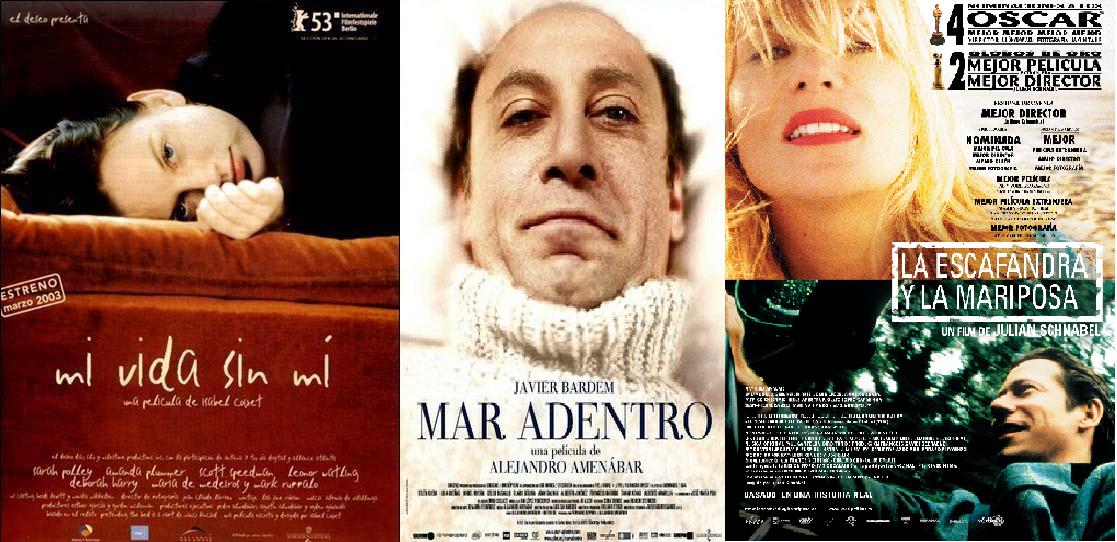 Looking at Bioethics through the Lens of Both American and Spanish Films
This is the first time we host this international program in collaboration with Case Western Reserve University. Taught by faculty from CWRU and UPV/EHU this course offers students a cross-cultural perspective on bioethics in the United States and Spain. This course uses the medium of film, complemented by readings in bioethics, film criticism, and medical research, to introduce students to a number of compelling bioethics issues.
Attendance to San Sebastian activities free of charge for IAS-Research members, UPV/EHU researchers and “Filosofía, Ciencia y Valores / Filosofia, Zientzia eta Balioak” master students.
More info: antonio.casado AT ehu DOT es
Call for a 4 year FPI (PhD) fellowship  associated with the research project “Autonomy and Levels of Organization” (FFI2011-25665) in the Department of Logic and Philosophy of Science at the University of the Basque Country (UPV/EHU)
Deadline: 23th of February 2012
Se convoca una beca predoctoral FPI de 4 años asociada al proyecto: ”AUTONOMIA Y NIVELES DE ORGANIZACIÓN” (FFI2011-25665), Departamento de Lógica y Filosofía de la Ciencia, Universidad del País Vasco (UPV/EHU)
Plazo: 23 de febrero
Friday 3 December, 2010, 11:30
The Location of Subjective Information
Dr Michael Beaton, University of Sussex
Using Tononi’s Information Integration Theory of consciousness as a
jumping off point, I will critically examine the claim that internal neural
states carry information for the subject. I will review Edwin Jaynes’
presentation of Cox’s Theorem, which demonstrates that the laws of
probability are the only consistent way to mathematically capture reasoning
in the face of uncertainty. Also following Jaynes, I will argue that
Shannon information is intimately bound up with probability, and that
information for a subject exists whenever subjective probabilities exist.
Therefore, I will suggest, information for a subject inheres in the
structure of a subject’s rational behaviour. I will argue that internal
information in neural states is always derivative (information for a
theorist) – even though dynamic neural complexity can be a crucial part of
the explanation of richly structured rational behaviour. Some important
clarifications will be noted. Firstly, the rationality in question here is
practical rationality (coherent, meaningful behaviour in the world) and not
abstract theoretical rationality. Secondly, whilst probability theory
provides rules which a rational subject should not breach, it does not
provide a full set of rules for ‘how to be rational’. Indeed, it remains
possible that rationality as such can never be fully captured in rules.
Finally, even though rationality inheres in a subject’s pattern of
behaviour, there are good reasons to think that the structures of the world
responsible for a subject’s rational behaviour extend beyond the subject’s
body; we should not expect to find rules of rationality encoded anywhere
inside a rational subject.